

Long-haired Dachshund
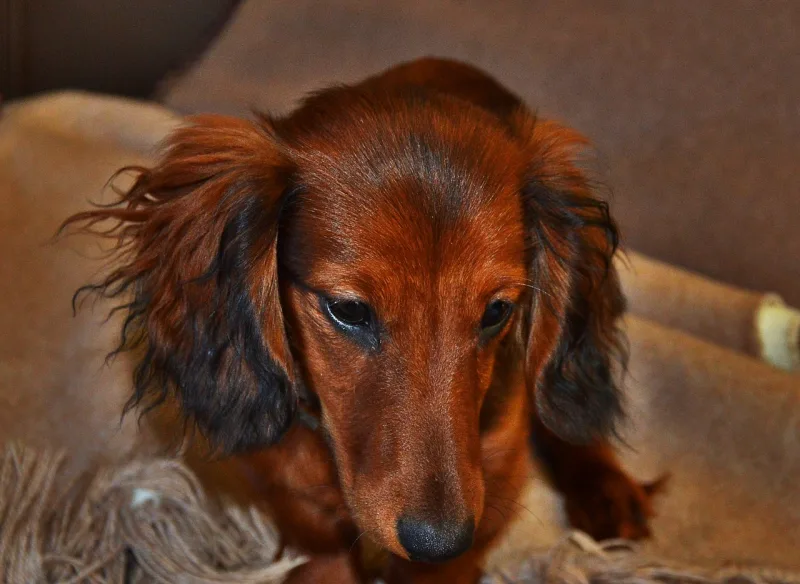
Long, silky coat with a friendly, easygoing temperament.
About the breed
Temperament
The long-haired Dachshund is often described as the softest and calmest of the Dachshunds: affectionate, attached to its family and happiest close to its people. It is still a true Dachshund, though — brave, curious and with a mind of its own.
Size and weight
A standard Dachshund typically weighs about 7–12 kg and a miniature up to about 5 kg; the rabbit size is smaller still. The build is the same in all of them: a low, long dog with short legs, a long back and a deep chest.
Coat and grooming
The coat is long and silky, with longer feathering on the ears, legs, chest and tail. Brush it two or three times a week, especially behind the ears and under the legs, where tangles form easily. Bathe as needed, check the ears regularly and keep the nails trimmed.
Exercise
The Dachshund is a hunting dog bred to work underground. It needs daily walks, usually two or three a day, plus games and sniffing tasks; without enough to do it gets bored, barks and finds its own occupations.
Who it suits
Suits an apartment and a family with school-age children who handle a dog gently, and can suit a first-time owner ready for consistent training. A poorer fit for a home with toddlers who might pick up and drop a puppy, for a dog that would be left alone for long hours, or for a home with a lot of stairs.
Care and health
Protect the back. Dachshunds have a long back, and the breed is known for a tendency to intervertebral disc problems (IVDD). Do not let the dog jump off sofas, beds or other heights — a ramp or dog steps is better; limit stairs; and when you lift a Dachshund, support the chest and the hindquarters together.
Keep the weight lean. Extra weight loads the spine, so feed the recommended amount, go easy on treats and watch the waistline; regular walks keep the back muscles strong.
Watch for warning signs. If your Dachshund suddenly does not want to move, yelps when picked up or is unsteady on its hind legs, see a vet without delay.
Routine care. Regular vet visits and care of the teeth and nails, as for any dog.
This is general advice and does not replace a consultation with a vet.
More photos
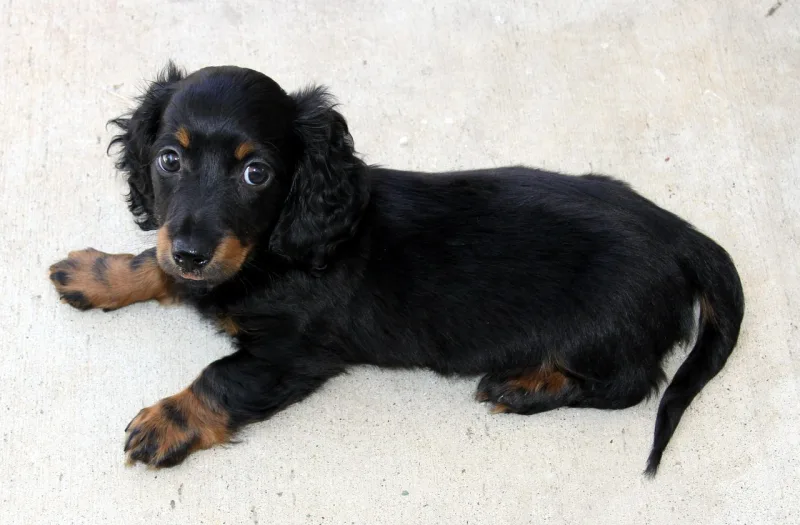
Puppy availability changes with each litter — ask us for the current status.
Before purchasing, please review the terms of buying animals and our health guarantees.